
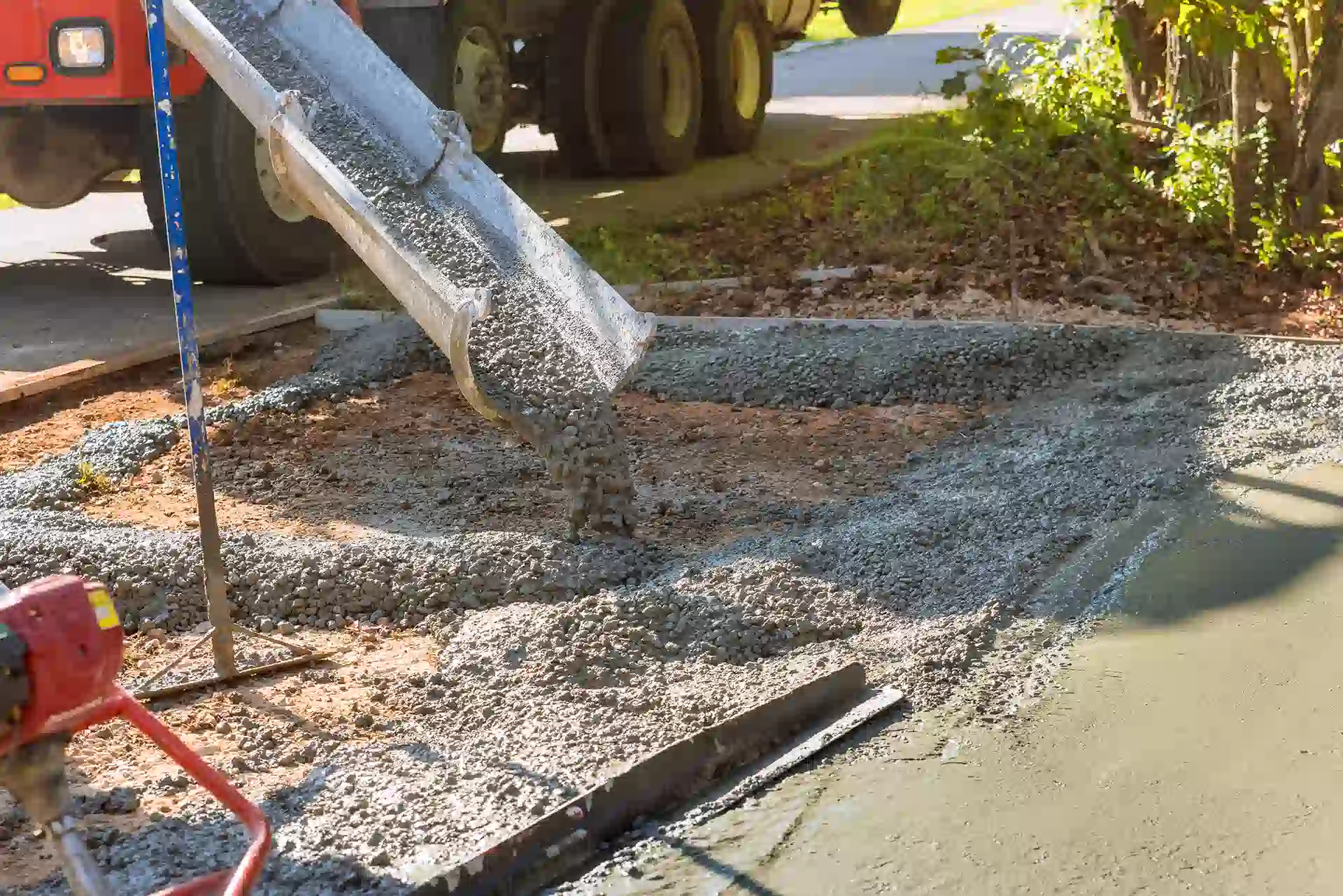
Whether you have recently poured a brand-new driveway, installed a custom backyard patio, or laid a structural foundation slab, one of the most critical questions you face is: "How long does concrete take to cure?" Understanding the curing process is essential because using your new concrete surface too early can lead to permanent structural cracking, surface scarring, and reduced lifespan. In this comprehensive guide, Brook Concrete Company explains the science behind concrete curing, provides clear timelines for foot and vehicle traffic, and highlights essential protection tips for your new installation. For more on proper driveway installation, visit our concrete driveway service page.
The Critical Difference Between "Setting" and "Curing"
Many homeowners confuse concrete "setting" with concrete "curing," assuming that as soon as the surface feels hard to the touch, the job is complete. However, these two terms represent completely different physical and chemical processes:
- Initial Setting: This is the initial hardening phase that occurs within the first 4 to 12 hours after pouring. During this window, liquid concrete stiffens into a solid mass as cement begins reacting with water, reaching a state where it can support light touch without leaving an impression.
- Chemical Curing (Hydration): Curing is not simply "drying out." In fact, concrete does not harden by drying—it hardens through a continuous chemical reaction called hydration, in which cement particles bond with water molecules to form microscopic crystals that lock aggregate stones and sand into a rock-solid matrix. Full design compressive strength is reached at 28 days.
Standard Timelines: When Can You Walk and Drive on New Concrete?
While every pour is influenced by ambient weather conditions, here is the standard industry timeline for new concrete flatwork:
- 24 to 48 Hours: Initial set is complete. The surface can safely handle light human foot traffic. Keep pets, bicycles, and heavy garden tools off the surface during this time to avoid scratching the tender finish.
- 7 Days (70% Design Strength): The concrete has reached approximately 70% of its full compressive strength. It is now safe for standard passenger cars, minivans, and small SUVs to drive and park on the surface.
- 28 Days (100% Full Design Strength): The slab has achieved its full design strength (typically 3,500 to 4,500+ PSI). It can now safely support heavy delivery trucks, RVs, dumpster roll-offs, and intensive structural framing loads on a new concrete slab.
How North Georgia Weather Influences Curing Rates
Temperature, humidity, and wind play massive roles in the hydration process. In hot, humid Dunwoody summers, surface water can evaporate too quickly before cement particles hydrate, leading to weak surface paste and hairline plastic shrinkage cracking. Our crews apply specialized liquid membrane curing compounds to trap vital moisture inside the slab. Conversely, during cold winter months, hydration slows dramatically. When temperatures dip near freezing, concrete must be protected with thermal curing blankets to prevent water from freezing inside the pores.
Common Curing Mistakes to Avoid
To ensure your new concrete achieves its maximum design strength, avoid these critical mistakes during the first month:
- Driving on the Surface Too Early: Parking heavy vehicles before the 7-day mark puts immense tensile stress on green concrete, leading to premature cracking.
- Applying Chemical De-Icers: Never apply salt or chemical de-icing products during the first winter season; these chemicals force moisture into concrete pores, where freeze-thaw cycles cause surface spalling.
- Premature High-Pressure Washing: Avoid aggressive pressure washing during the first 30 days, as high-pressure water jets can erode the curing surface cream.
- Skipping Moisture Control: In hot, sunny weather, lightly misting your new concrete with water several times a day (moist curing) significantly improves ultimate surface strength.
If unexpected surface defects or settling occur, our team provides targeted concrete repair services. Our placement and curing protocols adhere strictly to guidelines set forth by the Portland Cement Association.
Frequently Asked Questions
Why does fresh concrete appear dark or blotchy while curing?
Color variations are completely normal during the first several weeks. As moisture evaporates unevenly from different depths of the slab, the concrete will gradually lighten and equalize to a uniform light gray tone.
Can I seal my new concrete immediately after pouring?
Penetrating silane/siloxane sealers or decorative acrylic topical sealers should generally not be applied until the concrete has cured for at least 28 days to prevent trapping moisture inside the slab.
Contact Dunwoody's Concrete Specialists
Have questions about maintaining or installing new concrete flatwork? Contact Brook Concrete Company today to schedule your complimentary consultation and written estimate in Dunwoody, GA!