
When planning a major hardscape upgrade—whether a backyard entertainment patio, front walkway, or driveway—homeowners frequently find themselves debating between two premier materials: stamped concrete and interlocking pavers. Both options deliver sophisticated aesthetic appeal, rich color variations, and significant curb appeal compared to plain gray flatwork. However, they differ substantially in installation techniques, structural longevity, ongoing maintenance demands, and long-term costs. In this comprehensive comparison, Brook Concrete Company outlines the distinct pros and cons of each material to help you choose the best solution for your Dunwoody property. For detailed specifications on our decorative services, visit our stamped concrete page.
Understanding Stamped Concrete: Seamless Architectural Beauty
Stamped concrete is a continuous, poured monolithic concrete slab that is infused with integral color pigments and imprinted with specialized texturing mats while still plastic. This process creates realistic textures and grout lines mimicking natural flagstone, slate, cobblestone, or brick. Here are its primary advantages and considerations:
- Continuous Monolithic Surface: Because stamped concrete is poured as a single reinforced slab, there are no individual sand-filled joints between stones. This means weeds, moss, and grass cannot sprout up between pattern impressions.
- Superior Structural Stability in Clay Soils: North Georgia's expansive red clay shifts with moisture changes. Individual pavers frequently heave and sink independently, creating uneven trip ledges. Stamped concrete slabs distribute weight across a wide footprint, preventing localized settlement.
- Faster Installation Time: Pouring and stamping an expansive backyard concrete patio typically takes only two to three days, whereas hand-laying thousands of individual pavers can require a week or more of intensive labor.
- Lower Upfront Investment: Stamped concrete generally costs 20% to 40% less per square foot to install than high-end natural stone or interlocking pavers due to reduced manual labor.
- Maintenance Requirements: Stamped concrete requires periodic application of a protective acrylic clear coat every two to three years to maintain color vibrancy and protect against surface abrasion.
Understanding Interlocking Pavers: Modular Versatility
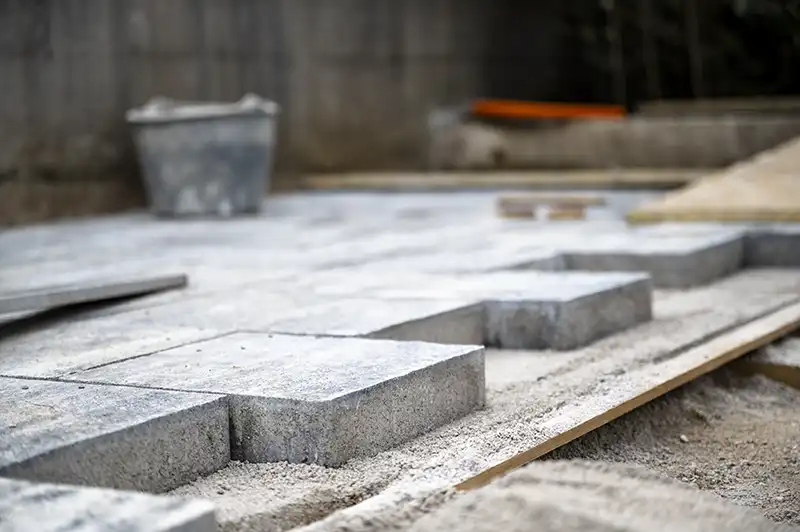
Interlocking pavers consist of individual pre-cast concrete or clay brick units laid over a bedding sand layer and compacted aggregate base. Here are the main characteristics of paver systems:
- Modular Repairability: The primary advantage of pavers is that individual damaged or stained blocks can be pulled up and replaced without tearing out the surrounding area.
- Immediate Usability: Paver installations do not require a chemical curing period; you can walk or drive on them immediately upon completion.
- Joint Sand Maintenance: Pavers rely on polymeric sand between joints to stay locked together. Rain and pressure washing gradually wash this sand away, requiring periodic re-sanding to prevent weed growth and shifting.
- Susceptibility to Uneven Settling: If water erodes the sand bedding layer beneath pavers, individual blocks will sink or tilt, creating dangerous trip hazards that require manual re-leveling.
Comparing Applications: Patios, Driveways, and Pool Surrounds
Both materials perform well across diverse hardscape environments, but each has specific areas of excellence. For a custom backyard patio, stamped concrete offers unlimited artistic flexibility, allowing for sweeping organic curves and integrated seat walls. Around a concrete pool deck, stamped concrete treated with non-slip polymer additives provides a seamless, barefoot-friendly surface that prevents toe-stubbing and eliminates weed growth in wet environments.
Evaluating Long-Term Value and Return on Investment
While pavers offer modular repair benefits, their higher initial installation cost and ongoing joint maintenance requirements often make them more expensive over a ten-year horizon. Stamped concrete delivers the luxurious appearance of natural masonry at a substantially lower cost per square foot, providing an exceptional return on investment for homeowners seeking maximum aesthetic impact within budget.
Our decorative installations adhere strictly to technical standards established by the American Society of Concrete Contractors, ensuring your hardscape achieves lasting beauty and structural excellence.
Frequently Asked Questions
Does stamped concrete crack over time?
All concrete naturally shrinks as it cures. However, by cutting control joints strategically along stamp pattern lines, any microscopic shrinkage is concealed within the grout joints, keeping the surface looking seamless.
Can stamped concrete be sealed with a slip-resistant finish?
Yes. For pool decks, steps, and walkways, we blend clear polymer anti-skid additives directly into the topcoat sealer, providing safe traction even when wet.
Schedule Your Free Decorative Hardscape Consultation
Discover how custom stamped concrete can transform your outdoor living space. Contact Brook Concrete Company today to schedule your complimentary design consultation and estimate in Dunwoody, GA!